

Devon, UK
The UK strand of the project focuses on the rivers, reservoirs and quarry pools of Devon, with a particular focus on Dartmoor National Park and the rivers that rise to source upon it. These waters are used for a wide range of recreational practices, but swimming is our focus.
The research for this fieldsite is currently being carried out. This involves speaking to wild swimming groups, visitors at popular swimming sites, landowners and commoners, organisations working to protect and represent Devon’s rivers, and really anyone who has something to say about the history, present and future of the moor’s waters.
In the autumn we will be conducting a set of oral history interviews to capture stories of Dartmoor’s waters through time, and weaving these together with existing oral history collections and written material sourced from local archives.
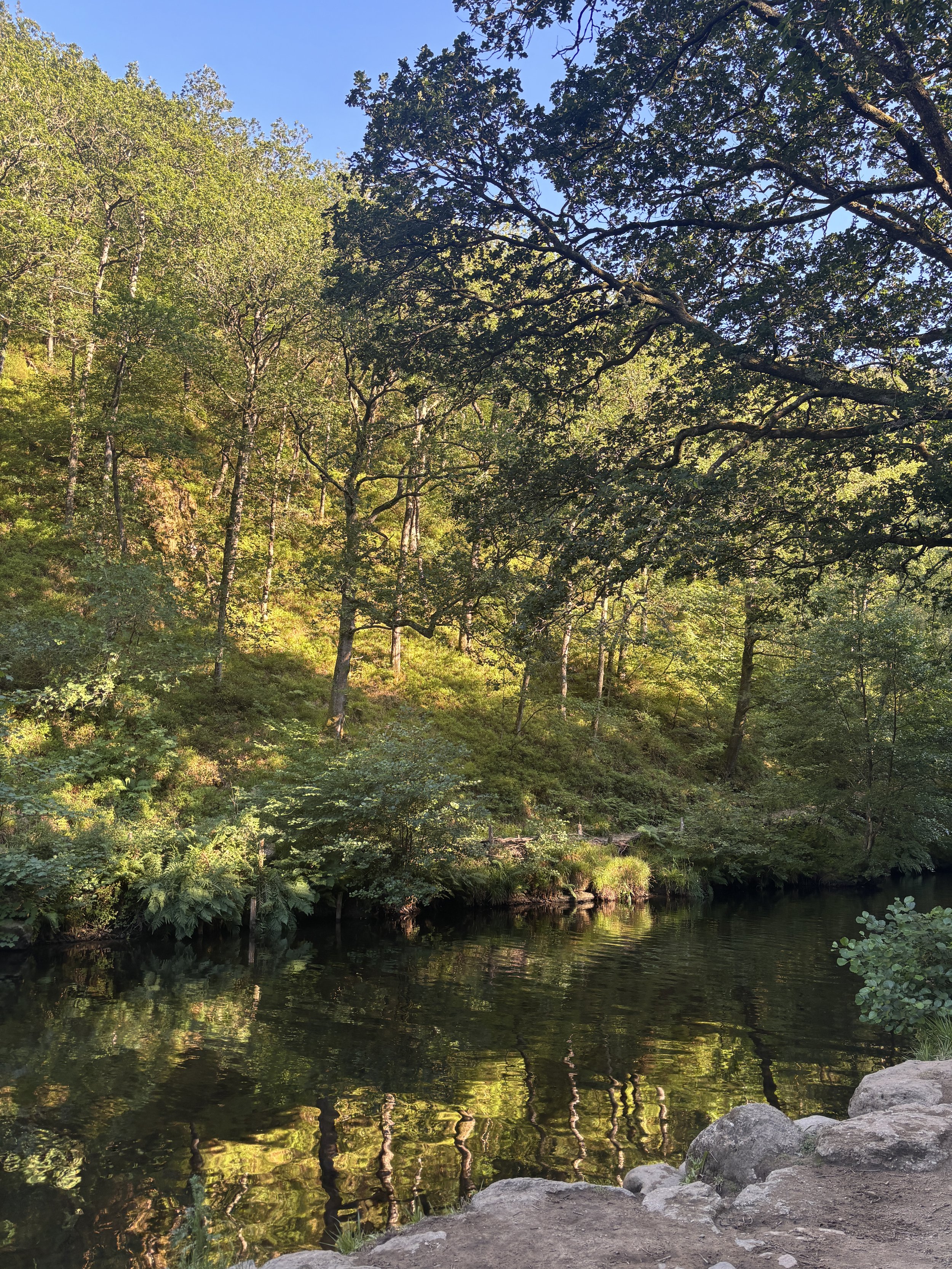
“Fourteen rivers are the life-force of Dartmoor. Thee flow north to the Bristol Channel. They are the East and West Okements and the Taw. Others flow south-east and south-west to the English Channel. They are the Dart, Avon, Erne, Yealm, Plym, Meavy, Tavy, Waltham, Lud, and North and South Teign. Of them all the most important is the Dart, which gives the moor its name.”
About Dartmoor
Dartmoor is an upland landscape in east Devon, in south-west England. It is known for its distinctive granite outcrops — called tors — and is crossed by 24 rivers and key tributaries. Dartmoor was designated a British National Park in 1951, a status afforded to ‘an extensive area of beautiful and relatively wild country’, which the nation would benefit from the preservation of its landscape, wildlife, historical buildings and established farming uses, whilst also gaining access for ‘open air enjoyment’ (Dower Report, 1945). Much of the historical and contemporary discussions about Dartmoor are framed by these themes: leisure, access, conservation and wildness. From the mid-nineteenth century, Dartmoor’s tourist industry has been intimately connected to it being articulated as a ‘wild’ space, exposed and capricious, with unpredictable extreme weather conditions and only sparsely crossed by roads.
More recently, a different understanding of wildness, as uncultivated, has appeared to accompany swimming practices undertaken outside in natural waters. In the past decade, open water swimming has become increasingly popular in the UK as a form of health practice. Swimmers and researchers have identified its value for particular chronic conditions such as arthritis, and for their mental health. In particular wild swimming — in lakes, rivers and the sea — has been framed as a ‘wellbeing’ pursuit, the sense of independence and connection to nature both encouraging improved mood and reduced stress among participants. These narratives of wellbeing often collide with issues around pollution and water quality, which several organisations are tackling for Dartmoor’s rivers.
However, contestations around who is able to access these wilds for leisure pursuits have been ongoing. Concerns are often levied that the greater the public access, the more threat posed to the rare beauty and wildness of the moorland. Whilst this tension is not unique to Dartmoor, it takes a particular form due to the complex system of landownership in the region. There are 54 owners of land units on Dartmoor, including family estates owned by the Duchy of Cornwall and other ancient manorial holdings, governmental and conservation organisations such as the Ministry of Defence, Natural England, the National Trust and the National Park Authority, and water and mining companies. These rights to ‘private’ ownership are intersected by two other systems of right to land on Dartmoor: commoners’ grazing rights and public access rights. Over 50% of Dartmoor is accessible on foot, horseback and for wild camping, due to the Dartmoor Commons Act (1985), the Countryside and Rights of Way Act (2000) and through permissive access agreements by landowners.
Swimming occupies a distinctive position in this melange, as a practice that is still absent from right to roam legislation. Landowners usually hold rights to the river front (riparian) rights and can control permissions over who swims on their property.