
Mongolia
Mongolia is an independent country bordering Russia and China. With 3.5 million people living within its borders, Mongolia’s cultural ties extend beyond them, to include Buryatia (Russia) to the north and the Inner Mongolian semi-autonomous region of China to the south and east. The Mongolian region has often been characterized by a combination of mobile pastoral economies, Tibetan Buddhist and shamanic elements, Mongolian language and script, and patrilineal social organization.
While the country is perhaps best known for its expansive medieval Mongol empire, the 20th century witnessed dramatic political, economic and social change: the end of nearly 300 years of Manchurian rule; a decade of theocratic self-rule; seven decades of state socialism as a satellite state of the Soviet Union; and shift to multi-party parliamentary governance and marketized economy in the early 1990s.
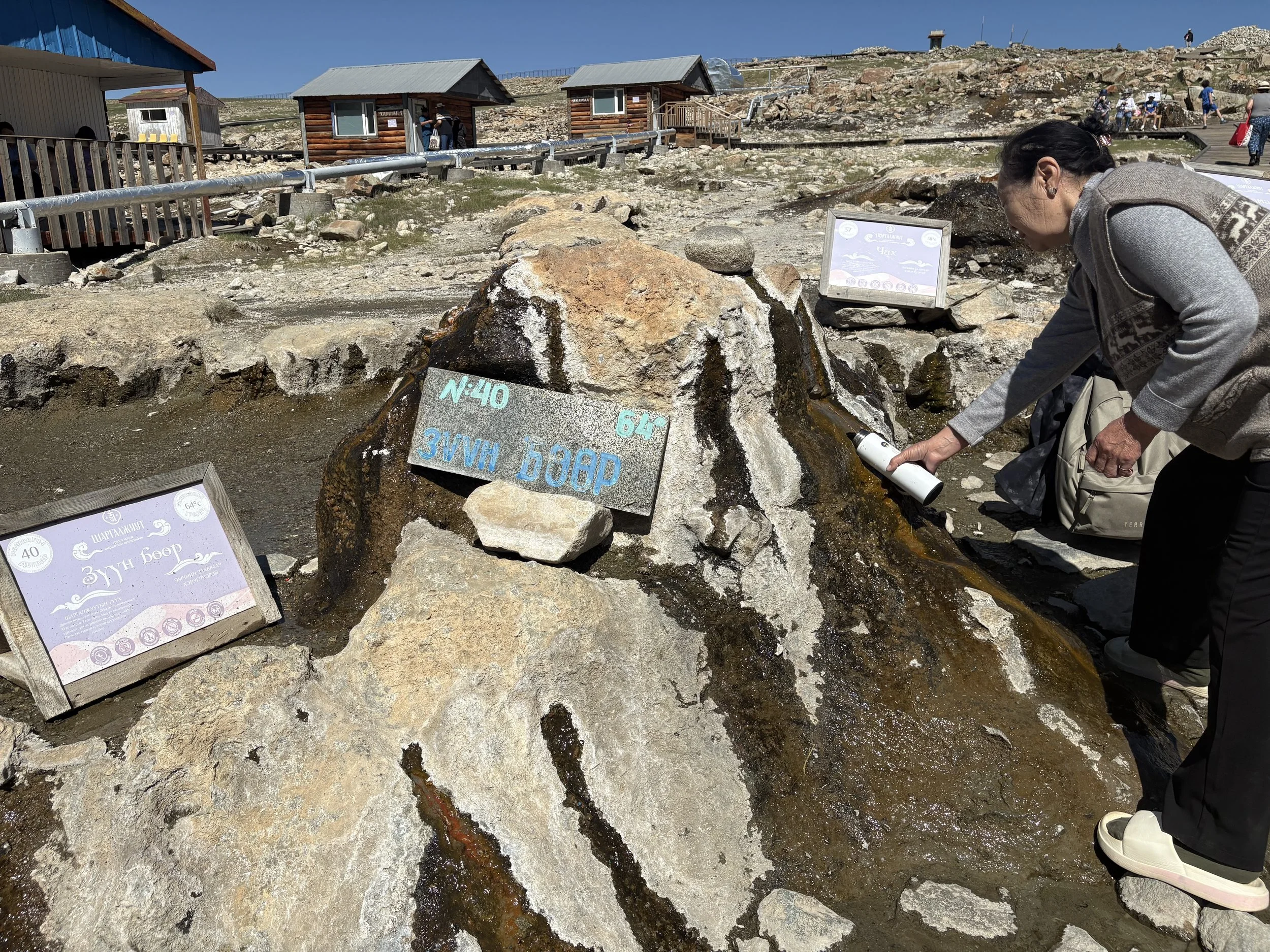
Shargaljuut mineral spring sanatorium
While used prior to the arrival of the so-called ‘third wave’ of Tibetan Buddhism in the late 16th century, mineral springs were harnessed by Tibetan Buddhist monasteries and medical colleges for their medicinal qualities from the 17th century onward. With the onset of state socialism in the early 1920s, Soviet scientific and medical traditions took hold across the country. Their ties to Tibetan medicine severed, mineral springs became key sites where Soviet nature therapy was developed. Six large ‘national’ sanatoria and many smaller rest homes for herding and agricultural collectives were constructed, designed to refresh and re-energise the proletariat body so it could work all year round. Increasingly commercialised and privatised in the last few decades, mineral spring sanatoria remain popular destinations today, albeit in primarily monetised schemes and amidst the country’s increasingly decentralised and neoliberalised medical care.
While a therapeutic ‘mother nature’ holds value in Mongolian public thought, one prominent aspect is rashaan, or mineral spring water. Rashaan is originally a Sanskrit word, amrita, (pronounced ‘rasana’) meaning ‘the divine ambrosia of the gods, which was recovered during the churning of the cosmic ocean. The Sanskrit term amrita means immortal or deathless, and its Tibetan equivalent dutsi (bdud-rtsi) means the nectar (rtsi) that overcomes the demon or mara (bdud) of death’ (Beer 2013, 245).
Mongolia is home to several hundred rashaan, spanning from small hot or cold, marked or unmarked springs emerging from the ground, to pools, ponds, lakes, and marshes to well-established sanatoria (rashaan suvilal) that treat some 15,000 patients per year, using balneotherapy alongside bio- and traditional medicine.
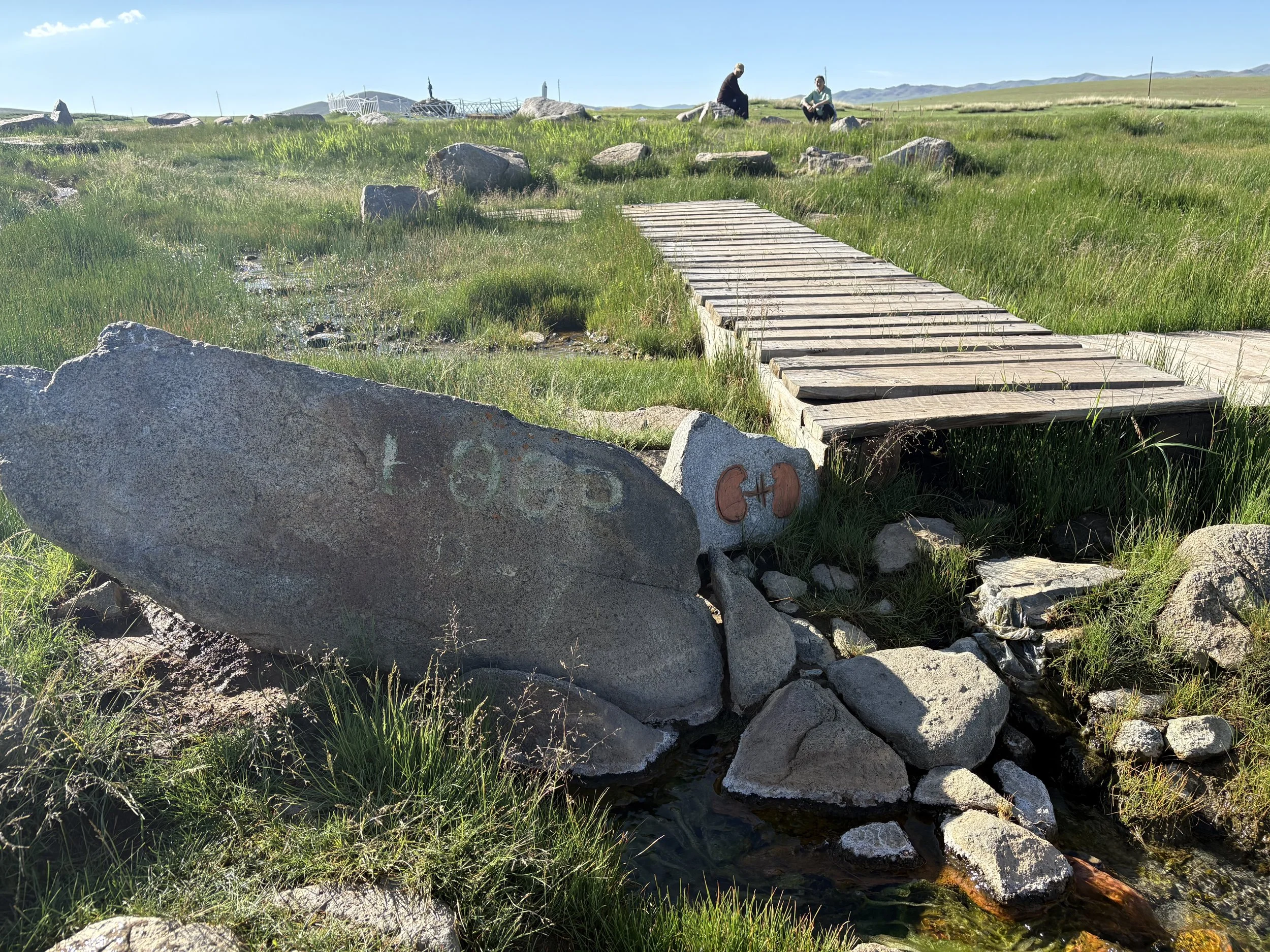
Khuremt mineral spring